Showing posts with label mystery. Show all posts

Monday, May 11, 2015

Ahhh, Florence

Probably the most exciting thing about this book -- Death in Autumn by Magdalen Nabb -- is that it's the book I saw in the airport at Rome, didn't buy, and then couldn't find again. So how did I find it, you ask? I picked it up at the Open Books/Reader book swap. Pure serendipity. I see from that old post that I thought the book I was looking for had an Italian author, which is what tripped me up trying to find it again; Nabb is (or was) British.


And this story has a further happy ending, because I enjoyed this book. It's not very long and it's a good, focused mystery story that manages to also have plenty of good characters and local color. I liked that the main detective, the Marshal, and his senior, the Captain (am I going to go figure out their names? no I am not) were working together on the case. In fact, on the whole, this was a very competent group of police with little internal tension, which is rare. Usually, even if you have a clever police detective in a novel s/he is working against corruption or laziness or bureaucracy or stupidity in their own force, so I thought this was a nice change of pace.


I don't have much else to say about this, I suppose, except that I am looking forward to returning to this series.

Monday, May 26, 2014

Summertime, and the reading is series

I can't help it, I like a good series. I think I hinted at this, at least, in my Anne of Green Gables post; I have that sort of gotta catch em all compulsion when it comes to book series. (See also the Dragonriders of Pern books.) (Oh, Pern.) Here in adulthood (?) however, I have learned that it's okay to just move on and not finish the series if I feel like it. One advantage of this is that you don't get caught in an obsessive-compulsive reading cycle (always a plus); another that I've discovered recently is that it's really nice to come back to a series when you've been away. So here are three series I've picked back up in the last week or so.*


So, first up: the SPQR series by John Maddox Roberts. I read a couple of these on Kindle a few years ago and enjoyed them, and recently I saw fellow classics nerd and all-around cool person Meg was reading them, so off I went to the library. After a rather frustrating hunt through the forest of Nora Roberts books (I like to get my books off the shelves myself like an honest woman, but this experience convinced me of the superiority of placing holds), I grabbed volume 6 here, the library not owning 3-5.

These are such fun books. They manage to balance the conventions of detective stories with a historical setting that doesn't have detectives or modern policing in a way that's fun and effective and not at all tedious. There are some blatantly exposition-y passages but I didn't mind them; it's all directly related to the plot and it's ancient Rome so maybe I'm just more willing to give it a pass in general. The main character (and narrator) makes me laugh, he's such a perfect grouchy, cynical Roman.


More historical mystery: the Max Liebermann series was the first thing I wrote about on this blog! I see in that post I wrote:
I liked them, and would have kept going for probably another couple of books if this were 2014 and there were another couple of books in the series.
GUYS IT'S 2014 RIGHT NOW
I remember when I got to the end of the available books that the stories were starting to feel same-y, and I'm pleased to report that taking a couple of years off helps address that problem. Death and the Maiden has a high-level-government-conspiracy thing going on as well as a cameo by Mahler (admittedly easier to achieve when you're writing a novel) and the SVU-level psychoanalysis I noted in that first post. I didn't really follow the conspiracy plot very well, and I'm not sure that the book was all that successful on the whole, but I did like being back with the characters, so this series and I can part amicably until the next time I stumble across a new volume.


And finally, which it's only THE GREATEST SERIES OF ALL TIME. You and Dr. Huang can draw your own conclusions from the fact that I, the compulsive completist, stopped reading these two from the end expressly because I didn't want to be done with them. However, as I had picked up the above series I decided it was time to finally read the last two Aubrey/Maturin books. The Hundred Days was a nice reminder of how much I love these books, even if, in itself, I didn't think was the finest installment of the series. I have to go back to the library for Blue at the Mizzen, but in the meantime I'm re-reading Desolation Island which is one of the ones I own (the first couple chapters with Jack on land just kill me).

I suppose there's also the published chapters of 21, but I don't know how I feel about those. (Basically, they published what Patrick O'Brian had written of the latest book at the time of his death, if you don't know what I'm talking about.) But a few chapters, without an actual book, and without any sort of revisions, isn't all that appealing to me. I don't get much out of fragments. But then I'm sure my completist impulse will compel me to check them out anyway.

Proud to share reading tastes with Ron Swanson

I hope you're all feeling the joy of warmer weather; I've been reading outside quite a bit this long weekend, it's madness.


* Each of these books I read in about a day. I'm telling you, I'm having this crazy-awesome reading moment.

Saturday, January 5, 2013

The Mini-Readathon (now even minier)

I don't really know about Readathons as an organized blog thing. (As you can tell, I'm kind of a sucky blogger.) Alice always wants to do them and can't, that's what I know. But I do love a theme, and the GIF Admiration Society, so here we are!


Now, I'm already Doin It Rong in two ways. First, I will be carrying our awesome theme to a self-defeating extreme by quitting at noon CST. My workload tripled on January 1st, you guys, and I've been freaking out about it all week, which wouldn't be so bad if "freaking out" including "actually doing some of the work".

Yeah, yeah
Anyway, so that's one thing. The other is that I started reading early, just to compensate. Which is maybe a violation of the rules or something? But then I burned up any advantage I may have had with getting dressed. Anyway.

So

The First Book of Mini-Readathon:

Nancy Drew #8: Nancy's Mysterious Letter
Mini, you say? How so? This is a children's book, written for mini people, which I myself enjoyed as a mini person. Also it requires mini effort.

I read a lot of Nancy Drew as a kid so I was glad to have an excuse/opportunity to revisit
the series and see what they were about. One of the things that struck me in reading this this morning is how little personality Nancy (or really anyone) in the book has. Everything's written in such simple language and there's very little in the story that doesn't relate to the mystery. Kid's books, eh!

The part where Nancy, Bess, and George go to visit their boyfriends at college was the most entertaining from a kitsch perspective. I remembered that Ned was the star of the football team but not that Bess and George's boys are on the second string! Haha. Actually the boys are always referred to as "friends" or "dates" which is sort of interesting -- as well as the fact that the author does not hesitate to put in six pages describing the progress of the Big Game in (what seems to me) play-by-play detail.

There is also a sailor character who says things like "she's gone to the chandler's for supplies and will be back at six bells. Haul your anchor and sit down, lass!" Oh dear oh dear.

Alright, I'll check back in in an hour and we'll see if I manage to read two whole books in my mini-Mini-Readathon.

Tuesday, August 7, 2012

STEALTH READ-ALONG JOIN

Aww yeah. You thought I was out of it, didn't you? You thought I wasn't participating in the Wilkie Collins Moonstone read-along hosted by Alice, and all because I missed the first post. "She couldn't get it together to even write a throw-away introduction post," you said. "She's finished." NOPE. I was sick and things last week, WHATEVER. I am following my dreams, and reaching for the stars, and in it to win it like a Chinese race walker.


LET'S DO THIS. PART ONE.

1. So apparently the "moonstone" is not in fact a moonstone but a yellow diamond?

I feel like he's doing this just to be annoying.

2. Once again we have the "various narratives" thing along with the "laborious explanation of the various narratives" thing.
I beg it to be understood that what I write here about my cousin (unless some necessity should arise for making it public) is for the information of the family only.
How titillating must this have been for a society that was so precise about who was allowed to know and communicate what types of information to and about whom.

3.
Powerless to recover their lost treasure by open force, the three guardian priests followed and watched it in disguise. The generations succeeded each other; the warrior who had committed the sacrilege perished miserably; the Moonstone passed (carrying its curse with it) from one lawless Mohammedan hand to another; and still, through all chances and changes, the successors of the three guardian priests kept their watch, waiting the day when the will of Vishnu the Preserver should restore to them their sacred gem.
Wait, you mean like

4. This bit kinda made me happy:
He brought the invaluable faculty, called common sense, to bear on the Colonel's letter. The whole thing, he declared, was simply absurd. Somewhere in his Indian wanderings, the Colonel had picked up with some wretched crystal which he took for a diamond. As for the danger of his being murdered, and the precautions devised to preserve his life and his piece of crystal, this was the nineteenth century, and any man in his senses had only to apply to the police.
Delicious.

5. We find out that the Moonstone is "as large, or nearly, as a plover's egg!" Setting aside the fact that "a plover's egg" is not a particularly helpful unit of measurement, Wilkie, this was disappointing to me because I had been picturing it as the size of a bar of soap. Yeah, I know that's not very realistic, but I was also picturing it as a moonstone rather than a yellow diamond. So... basically a shiny opalescent soap-like rock.

Here is an equally unhelpful visual aid. "Oh, so it's less than half the size of a swan egg!"

6. Wilkie, Wilkie, Wilkie. Where other authors describe women as "plain" or whatever, Wilkie's just all Daaaayyymn, that girl was ugg-lee!
"It isn't very likely, with her personal appearance, that she has got a lover."
The ugly women have a bad time of it in this world; let's hope it will be made up to them in another.
Rosanna doesn't seem likely to be quite as awesome as Marian, though. In fact, I don't see a lot of especially strong women so far in this book at all; although we keep being told that Lady V is so awesome, and Penelope isn't too shabby.

7. "Sergeant Cuff"? There is one thing Dickens does better, and Collins needs to stop trying to compete.

8. What happened to us in the 20th century that we lost so much type-setting awesomeness?
"Can you guess yet," inquired Mr Franklin, "who has stolen the Diamond?"
     "NOBODY HAS STOLEN THE DIAMOND," answered Sergeant Cuff.
C'mon, that's fantastic.

9.
(NOTA BENE - I translate Mrs Yolland out of the Yorkshire language into the English language.)
Amen/thank you.


The biggest question mark floating over my head right now is whether the diamond will actually turn out to have a curse on it, or whether Wilkie will debunk all the supernatural stuff. My inclination is toward the latter but I'm looking forward to seeing how he does it. After the Woman in White read-along, I think we all know the depths of insanity to which this author is willing to go (goodie goodie).

I also can't wait to get on to another narrator. I have a vague memory that Walter Hartright did go on this long at first but still, the fun really begins when we get a new viewpoint SO...

Wednesday, February 15, 2012

Mysteries and tote bags bring the drama

Republishing formerly-popular books seems to have become a Thing, and I am 110% on board with it (as you'll see from the many posts I make in the next few months about books like this). It's historically interesting to read something written in another era, and doubly so if the book was popular when first published; plus there's that added dash of intrigue if the book has since gone out of print.

And supposing we were to add foreignness to this already-irresistible equation? Ooh la la.


I bought The Mystery of a Hansom Cab by Fergus Hume at Daunt Books, which is almost always included on lists of interesting London bookstores. Located in the rather trendy Marylebone area, it's old and gorgeous and so on -- I don't want to steal other people's pictures, but if you Google Image search it, you'll see what I mean.

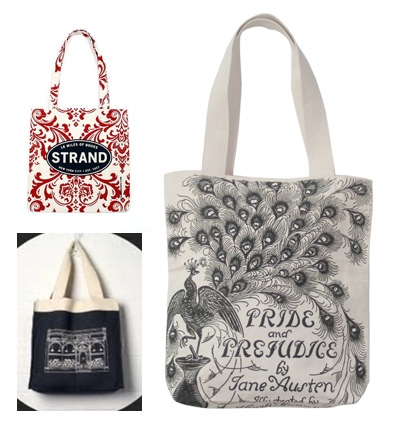
Daunt totebags are very popular at the British Library. I like to imagine that the readers putting their things in the lockers are composing catty little monologues worthy of a fashion week runway show audience. What, did she buy that Daunt tote this morning? That's right, bitch, I bought mine in '95, get a good look. A British Library tote at the British Library? Well aren't you just a delicate creative soul. Ooh, the beach umbrella Strand tote - that's a bold choice. Personally, I carry the Pride & Prejudice tote from Out of Print, a Christmas gift from my BFF. Thank you Laura! I feel like I can hold my own amongst the lit types now.
 
Haters to the left.
Aside from being pretty and whatnot, Daunt bills itself as a "travel" bookshop, and probably 60-70% of the store is arranged by countries, with travel guides, maps, essay collections, and fiction shelved together. Yes, it's pretty darn cool, and it makes you want to read lots of things from countries you don't usually read things from. The Mystery of a Hansom Cab is an 1886 Australian mystery novel set in Melbourne. Yes please.

The book is the sort of thing that makes me think, "ah, so this is why the Sherlock Holmes stories are such classics." It's not that it's bad, it's just that it's not particularly great. I know there's always a fair amount of angst about "the canon" and what gets called a classic and so, and certainly I'd never say that The Classics are the only books worth reading or anything like that -- if for no other reason than that people ought to read whatever they particularly like -- but at the same time, some books definitely stand the test of time better than others.

The Mystery of a Hansom Cab is one of those books that features a lot of Victorian angst. Why yes, I do have a good example:
But when Frettlby turned to go to the door, Madge, who had her eyes fixed on the doctor's face, saw how grave it was.
     "There is danger," she said, touching his arm as they paused, for a moment, at the door.
     "No! No!" he answered hastily.
     "Yes, there is," she persisted. "Tell me the worst, it is best for me to know."
     The doctor looked at her in some doubt for a few moments, and then placed his hand on her shoulder. "My dear young lady," he said gravely, "I will tell you what I have not dared to tell your father."
     "What?" she asked in a low voice, her face growing pale.
     "His heart is affected."
     "And there is great danger?"
     "Yes, great danger. In the event of any sudden shock--" he hesitated.
     "Yes -"
     "He would probably drop down dead."
     "God!"
BUM DUM DUM!!

The plot is plot is pretty contrived and the ending is fairly ridiculous -- moral of the story, kids: as long as secrets stay secret, everyone is much happier -- but it's entertaining enough. You know how people sometimes use the word "workmanlike" as kind of a diss for artistic things (I think they do anyway)? I kept thinking that the writing in this book was pretty workmanlike. The characters and the plot points clicked along but there wasn't an enormous amount of feeling to it. Lots of very convenient coincidences, people collapsing and throwing themselves at other peoples' feet as the story demands, that kind of thing. Again, it sort of shines a light on why, of all the Victorian detective fiction, Sherlock Holmes has endured. (Which reminds me that another curious feature of the story is that there are two detectives, one in the first and one in the second half of the case, and they aren't actually all that central. Is the star detective a development in the genre?)

Yeah, yeah, yeah, but I didn't buy it because I thought it was going to be the most thrilling mystery I'd ever read: I bought it because I was intrigued by its being Australian. For the most part the local color doesn't come in until the second half of the book, but it's there in spades. If nothing else, the solution to the mystery hinges on a contrast between the wild old days of the colony and the more respectable contemporary society. But there are little digressions that stress the "John Bull" character of the Australians and also discuss the backwardness of the weather and so on. And there's a foray (of course) into Melbourne's equivalent of Seven Dials:
If there is one thing which the Melbourne folk love more than another, it is music, their fondness for which is only equalled by their admiration for horse racing. Any street band which plays at all decently may be sure of a good audience, and a substantial remuneration for their playing. Some writer has described Melboune as Glasgow, with the sky of Alexandria, and certainly the beautiful climate of Australia, so Italian in its brightness, must have a great effect on the nature of such an adaptable race as the Anglo-Saxon.
     In spite of the dismal prognostications of Marcus Clarke regarding the future Australian, which he describes as being 'a tall, coarse, strong-jawed, greedy, pushing, talented man, excelling in swimming and horsemanship,' it is more likely that he will be a cultured, indolent individual, with an intense appreciation of the arts and sciences, and a dislike to hard work and utilitarian principles. Climatic influence should be taken into account with regard to the future Australian, and our posterity will be no more like us than the luxurious Venetians resembled their hardy forefathers, who first started to build on those lonely sandy islands of the Adriatic.
     This was the conclusion Mr Calton arrived at as he followed his guide through the crowded streets, and saw with what deep interest the crowd listened to the rhythmic strains of Strauss and the sparkling melodies of Offenbach. The brilliantly lit street, with the never ceasing stream of people pouring along; the shrill cries of the street Arabs, the rattle of vehicles, and the fitful strains of music, all made up a scene which fascinated him, and he could have gone on wandering all night, watching the myriad phases of human character constantly passing beneath his eyes.
I am assuming that this book has featured in some kind of academic work, although my quick JSTOR search didn't turn anything up.

Anyway, on the whole, even though I did not discover a new favorite piece of fiction, this book was quite entertaining, intentionally and unintentionally.

Thursday, December 29, 2011

Some light holiday reading

The best used bookstore I know of in my parents' hometown is Goodwill; one of the locations even has a little coffeeshop attached, and if you buy a book you get $1 off pastries. Not bad, not bad.

I picked this title up for a mere 79 cents the other day -- from the clearance rack at Goodwill. That bodes well, right?
"Whodunnit" is right up there with "cyber" on my list of words I hate

But! I am pleased to report that this was a good buy. The book contains a variety of short mystery stories featuring detectives in different periods of history. Many of the stories are republished from Ellery Queen but a few were written for this anthology. As the cover suggests, some of the sleuths are the stars of series, so if you like their stories this collection can be a jumping-off point. To this end, there's a little bibliography suggesting specific books according to their setting. The editor has obviously put a lot of work in and these aren't just public-domain stories collected up to make a quick buck. The bibliography and the introductions to each story make it clear that there is a real human opinion at work behind the selections, which I think makes the whole thing more enjoyable.

Unsurprisingly, given my well-known Roman history obsession, I liked the story starring Decius Metellus best, and I want to read one of the full-length books at some point, whenever I get time. I was really surprised by the number of different time periods represented though. So far I've read stories set in ancient Egypt, Golden Age Athens, republican Rome, imperial Rome, Justinian Byzantium, ancient China, and early medieval Ireland. Some are, I think, a little more "historical" than others, in that some stories seem more interested in exploring the limitations and methods of pre-modern "investigation" than others, which more or less transpose the standard format. It's interesting to see how different authors set about their stories, and the beauty of short stories is that you're never far off from something different.

I'm still plugging away at The Two Towers but this book makes for nice vacation reading. It's like that tray of cookies you can't stop nibbling at, even though you know you ought to be eating up the leftovers from your Christmas party's raw veggie tray.

Monday, October 24, 2011

Nothing to see here

Generally, I read one book at a time and I finish them. Sure, I'm not the most careful reader much of the time, and often I have to sort of knuckle down to get through the last few chapters, but usually I finish, even if I hate the book. So the worst books are not the books I hate, but the boring books; the books I can't bring myself to finish.

I first started reading Alexander McCall Smith's books while in London doing research a couple of years ago. Now, archives generally don't open to readers before 10:00am and they tend to close around 4:00 or 5:00pm; not only are weekend openings rare, some repositories are only open four days a week for researchers. Plus, archives are cold (generally) and filled with old papers, and I'm usually there in the summer when it's nice out, and hello it's London, so the idea of working for even six hours a day is really pushing it.* What I'm saying is, I tend to have a lot of downtime, which means I'm looking for things to read, and Smith is a goldmine. The guy's written a zillion books, and every used bookstore has a stack. I've stuck to the series that are set in Britain -- Isabel Dalhousie, 44 Scotland Street, and Corduroy Mansions (yes, these are all series; I'm telling you the man is prolific) -- and even when I'm not off being an extremely diligent intellectual in foreign lands, I have picked one or another up when I want something quick and entertaining.

But it seems that the shine is off for me, at least in the Isabel Dalhousie series. I started reading Comforts of a Muddy Saturday a week ago and I'm barely halfway through. It's not the lack of speed that's bothering me really; it's the lack of interest. In the last week, I've found myself forgetting the book at home or deliberately leaving it behind; even when I have it with me, I more often choose to stare at subway ads or check Facebook for the thousandth time rather than get my book out. This is unusual behavior and my brain seems to be sending a message: DO NOT WANT. So I'm giving up and moving on.


Why has this series gone from "unchallenging" to "boring" for me? I think I have to point the finger at the main character, Isabel. Here in the fifth book she's become actively uninteresting to me. Isabel's always been independently wealthy, but now she owns and edits alone the scholarly journal she used to work for (this seems epically, discreditingly weird, but then Philosophy isn't my discipline). She has an adorable baby and so many people and resources to take care of him that she barely needs to do anything. She's still involved with her niece's ex-boyfriend, but the niece seems to have forgiven it, so that's all hunky-dory. Everything's great! The only possible area of non-greatness is her insistence on not tying down her lover/baby-daddy and her neurotic anxiety over their age difference. Meanwhile, he loves her and she loves him and basically no one seems to have any problem with this relationship, so really it's all in her head. Bo-ring.

The philosophy angle of the books is obviously Smith's favorite part, and all of his books that I've read feature lots of introspective characters who think a lot about why people do what they do, and what they should do, and the why's and how's of morality. Isabel, as a professional philosopher, is no exception whatsoever of course. But, being bored by this book, I started getting annoyed at how thoroughly relativistic Isabel's thinking is. In general, you can sum up her little mental monologues as: "What a strange practice that is! Why do we do this instead of that? But then I suppose some people do that instead of this, and they prefer it. What would happen if we all did that instead of this? I suppose it all comes down to the individual situation." Bo-ring. Her one slightly controversial belief is that once she knows of an injustice she's morally obliged to get involved, but this is mostly just a hook to get some sort of plot going. Did I mention that these are technically mysteries? At the time of giving up, I am halfway into the book and we are just now learning about the mystery, and it's just too little too late for me.

Oh alas, it's not fun to find that books you liked well enough have lost their charm. I don't want to diss Smith. I respect someone who obviously loves what he does. He seems like a nice guy putting out nice books, and I really do respect that. I think it's neat how he's dabbled in a kind of revived serial publishing with 44 Scotland Street, Corduroy Mansions, etc. And I really genuinely did like the Isabel Dalhousie books at the beginning of the series. So if you like the series or any of the other series, more power to you, is what I'm saying. But I don't think I'll be pursing them anymore.


* Exaggeration for comic purposes. Please don't not hire me.

Tuesday, September 20, 2011

Spinsters getting things done

Agatha Christie's The Murder in the Vicarage was free for Kindle, so of course I snapped it up. Of course it was good. Liking an Agatha Christie mystery is like, I don't know, enjoying a symphony by Beethoven or admitting that the French make some pretty decent wine. I liked that the story was told from the first-person perspective of one of the by-stander characters; that was pretty neat. Also, sunsets are profoundly beautiful.

Agatha Christie novels seem like classic old-lady reading, which, I admit, is kind of a barrier for me, although I also avoid books that are very popular currently. I will need to get over that because Miss Marple is a very enjoyable character. Of course she's a kind of soul sister to Dorothy Sayers' Miss Climpson, another spinster using her snooping powers for good. And I suspect I'm drawn to both of them through my childhood love of Nancy Drew -- another series I burned through as quickly as possible. Sure, Nancy had Bess and Ned and her father (Mr. Drew, Esq.?), but for the most part her investigating activities were powered by her own snooping.

Miss Climpson, if you're wondering, first appears in Unnatural Death; another notable spinster of the Wimsey series is Miss Murchison, who appears in Strong Poison.

Of course (setting aside Nancy Drew, Yank of the first order) both Climpson and Marple also belong to a very particular moment in the history of women, and specifically of single women. The late Victorian and Edwardian period had seen the rise of professional women asserting their right to support themselves, often through serving the professional needs of other women. Although many scholars argue that the rise of Freudian theories, which cast suspicion on single women as "repressed" (see: Gaudy Night), put an end to this flowering of independent single women, the situation between the wars was still very significant. After all, it was widely believed that the slaughter of the First World War must leave many women single who would otherwise have gotten married. And, let's don't forget, women in Britain got the vote in two stages: in 1918 women who might be qualified as "older" or more stable received the vote, and in 1928 women got the vote on the same basis as men.

All of which is to say that in the 1920s and 1930s when Christie and Sayers were writing the characters of Marple and Climpson, respectively, we have a society that was thinking about the contributions women on their own could make to society, and had been thinking about this for some time. Of course this isn't all rosy. Both Marple and Climpson are obviously "marginal"; they're almost constantly being insulted directly or indirectly. Their detective activities are an outlet of useful activity in lives that would otherwise, by implication, be pretty useless. But I still think they're interesting characters that point up a contemporary interest in spinsters, and a wider sense that women were becoming important (somehow).

Setting the historical interest aside, I've always liked characters who use their Special Expertise to solve a problem. Maybe that's why I like mysteries so much: because I'm just waiting for the situation in which my knowing what guttae are or how to format a bibliographic entry in Chicago style makes me the hero.

Saturday, September 17, 2011

This series may possibly be set in Vienna

There I was at Open Books, looking for Dorothy Sayers. Disappointed that all the Wimsey books in stock were ones I'd already read (I'm dangerously close to having drawn that well dry), I let my eyes wander over the Mystery section, when A Death in Vienna, shelved under T for Tallis, Frank, caught my eye. I read the back. It was set in 1902. It sounded okay. So I bought it. This is the least thought I have put into selecting a book in a very long time. And it pretty much paid off.

There are five books so far in the series: A Death in Vienna, Vienna Blood, Fatal Lies, Vienna Secrets, and Vienna Twilight, and thanks to the Chicago Public Library I have now read all of them, in order. Thank you to the good citizens of Chicago for not impeding me in this because it really messes me up when I can't read things in order. I liked them, and would have kept going for probably another couple of books if this were 2014 and there were another couple of books in the series. I like them. I feel the need to repeat that because now I might end up writing some things that might sound slightly insulting.

There are two main characters, Max Liebermann (a psychologist and devotee of Freud's new-fangled theories) and Oskar Rheinhardt (a police detective with an admirable love of cake). Tallis strikes a nice balance with these two; they work together well, each in his own sphere. It's easy to have characters who seem to do nothing but solve mysteries, and I think one of the big strengths of the books is that Tallis really succeeds in anchoring the events of the stories in the flow of the normal passage of time and normal lives. Not that I don't usually overlook the mystery-story cliche of a small village with regular, frequent violent deaths. Furthermore, there's plenty of love and family dynamics and so even though every case seems to involve a serial killer, the books as a whole are well rounded out.

Liebermann and Rheinhardt like to play music together, and also get together in cafes to drink coffee and eat pastries, both of which activities are described in loving detail. I see on Amazon that some reviewers (not the mob, I'm talking about the short professional blurbs) draw a straight line between Liebermann and Rheinhardt and Aubrey and Maturin, which I think is unwarranted. As a devoted reader of Patrick O'Brian's superlative seafaring series, I don't think it's fair to accuse Tallis of too much borrowing. The music-playing makes ample sense within the setting, as does the friendship dynamic, so I think it all stands on its merits.

Incidentally, I'm fairly sure that Tallis just sidesteps the whole "origins" problem by just asserting in the first book that they're friends and have worked together before.

I say: well done, Frank Tallis. I suppose some people would cry laziness or bad form, but I'm perfectly happy just to get on with things without some kind of awkward shoehorning-in of backstory.

The mysteries themselves are okay; lots of blood and gore and complex solutions. Tallis has two central gimmicks (not used in a pejorative sense) in his series. First, the historical setting and particularly Liebermann's Jewish heritage within that setting. This aspect is okay, but starting to get a little creaky toward the end of the series-so-far.

Second is the psychoanalysis, which is fascinating for a totally different reason than the author (must) intend. Liebermann's contribution to the investigations is his application of Freud's hot-off-the-pen theories - Freud is actually a character in the books, and Liebermann often meets with him to discuss interpretations. Tallis himself is described in his author bio as "a practicing clinical psychologist and an expert in obsessional states." And yet! None of Max/Tallis/Freud's insights seem terribly surprising to this veteran of Law and Order: SVU. I'm going to take Tallis' intelligence and authority at face value, leaving only the following possible conclusions:

1. Freud's theories have really permeated our modern consciousness, to the degree that even I am aware of them.

2. Tallis underestimates the psychoanalytical training his readers (I) have had from the eminent Doctor Huang and his colleagues at NYPD's SVU.

3. There really is only so much that can be said about murderous sexual perversion.

And on that hopeful note I shall leave you.